 Weather today
New Black Sea blockade fuels fears of food crisis and migration wave

Europe fears a devastating crisis with ripple effects could erupt as Russia’s war in Ukraine imposes a new blockade on the Black Sea, choking off a vital trade route.
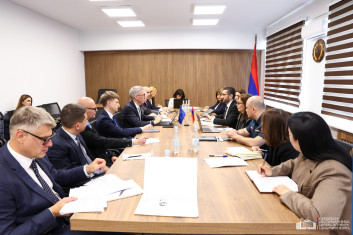
The sense of alarm came to the fore on Wednesday during a meeting of EU foreign ministers in Ireland, marked by calls for an immediate ceasefire in the region.
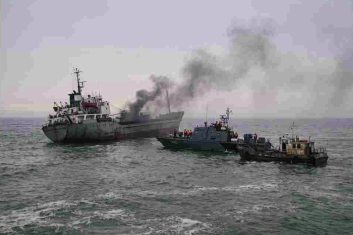
"In the Black Sea, Russian strikes on grain ships could cause another worldwide food security shock," the EU's High Representative Kaja Kallas said.
Belgium's Maxime Prévot urged a "coordinated solution" to avert what he described as a threefold disaster: a collapse in Ukraine's state revenues, a global food crisis in Africa and an intensification of large-scale migration flows towards Europe.
"The blockages of grain and energy shipments in the Black Sea are not something we can simply watch from a distance either," he said.
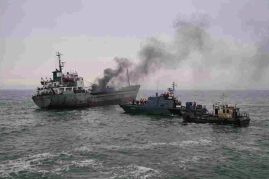
Since July, Moscow has ramped up attacks on Ukraine's ports and vessels in the Black Sea, severely hampering its ability to sell grain to global clients such as Egypt, Algeria, Tunisia, Yemen and Indonesia, among others. Kyiv has responded in kind and launched drone and missile strikes against Russian ships and hubs.
The escalation has coincided with the peak of the harvest season in Ukraine and left scores of maize, barley and wheat piling up inside the country.
Before the renewed strikes, Ukraine exported 6 million tonnes of agricultural and steel products every month via three ports: Odesa, Chornomorsk and Pivdenny.
Now, it trades about 4.5 million tonnes via alternative routes as operators remain hesitant to undertake the dangerous sea voyage.
But these routes, also known as solidarity lanes, no longer benefit from a tariff-free regime, which Brussels abolished after backlash from Eastern European countries.
One of them, which connects Ukrainian exports to Romania's Port of Constanța via the Danube, is going through an unprecedented summer drought.
Bucharest has discussed logistical options with Kyiv to increase transit through the solidarity lanes, Romanian Foreign Minister Oana-Silvia Țoiu said in Ireland, expressing concern over the steady rise in global food prices.
"It is an essential instrument to allow proper access to affordable prices for grains across the Middle East and Africa," she said.
Her Ukrainian counterpart, Andrii Sybiha, who also participated in the meeting, urged Europeans to put "pressure" on Russia to achieve a full ceasefire in the Black Sea.
Sybiha said the alternative routes would never "compensate fully" exports by sea.




 Studio One